
 Napoleon, who conquered much of Europe, died at age 51 on the tiny island of St. Helena, where he had been exiled. Even today St. Helena is one of the most isolated places on earth. (See it on a map.) He was buried by the British in a grave with no name, primarily because of a dispute over which name should go on the tomb. Some wanted his full name - Napoleon Bonaparte. Others wanted the single name "Napoleon." In France, kings went by a single name.
Almost 20 years later, Napoleon's remains were returned to Paris, where he was given a state funeral and buried under the dome of Les Invalides, a church near a hospital complex for French soldiers. Napolean, who stood 5'4" tall, is buried in a massive sarcophagus, the outer layer of which is made of porphyry marble. Inlaid marble lettering around his tomb commemorates his most famous victories. One battle not marked is Waterloo, which was his final defeat.
That's enough history!
 Yes, another self-indulgent photo! And you wouldn't know that this is Paris, would you? It could be our local Mini-Mart. But check out the the wine section of this petite store. Only in France would you see something like this.
 They float if you drop them into the canal. But otherwise, they seem less than user friendly - no stretch, not stealthy, and a little heavy.
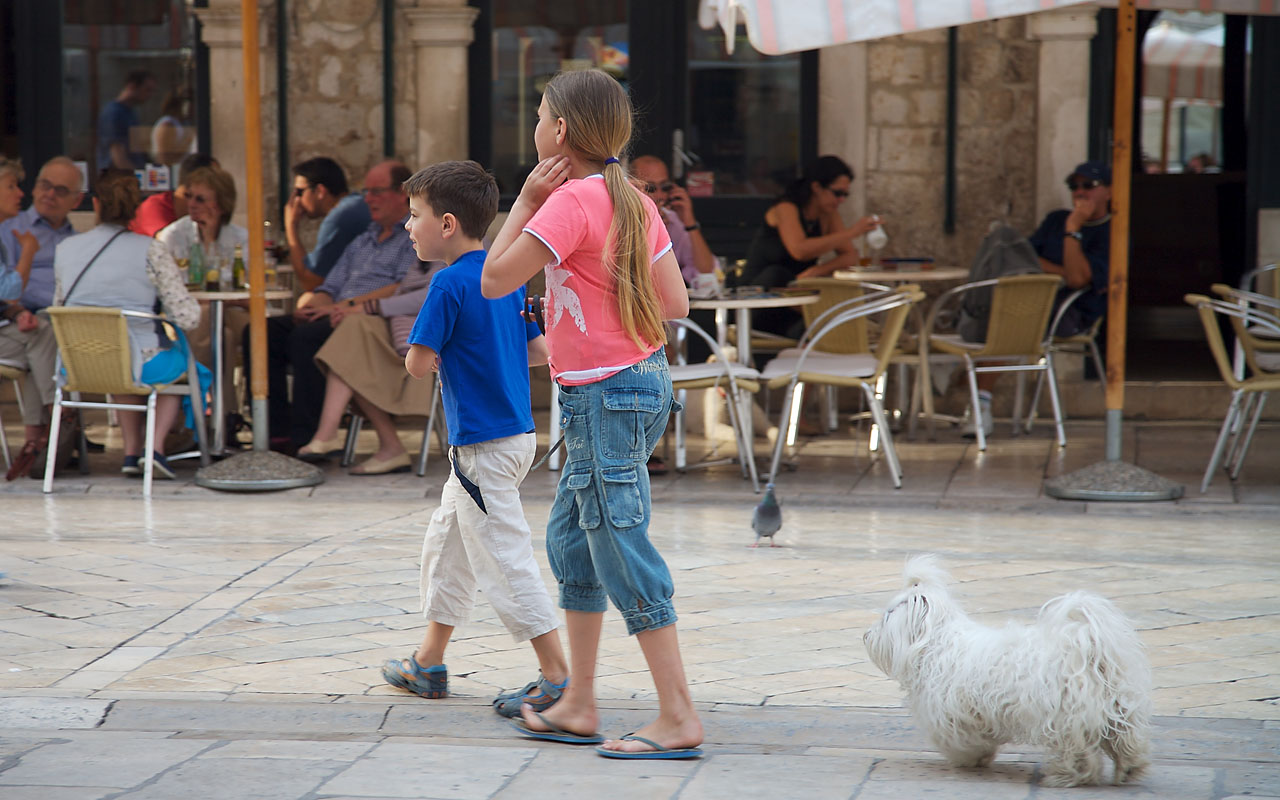 This photo was taken on the Stradun, the main street that runs through the center of Dubrovnik, Croatia. Many European cities have parts that are "people friendly," including Dubrovnik. No cars allowed - only pedestrians. This is a strange concept to a citizen of the US who lives in a city that is missing sidewalks in many key places. You want to walk to Walmart? You must be kidding!
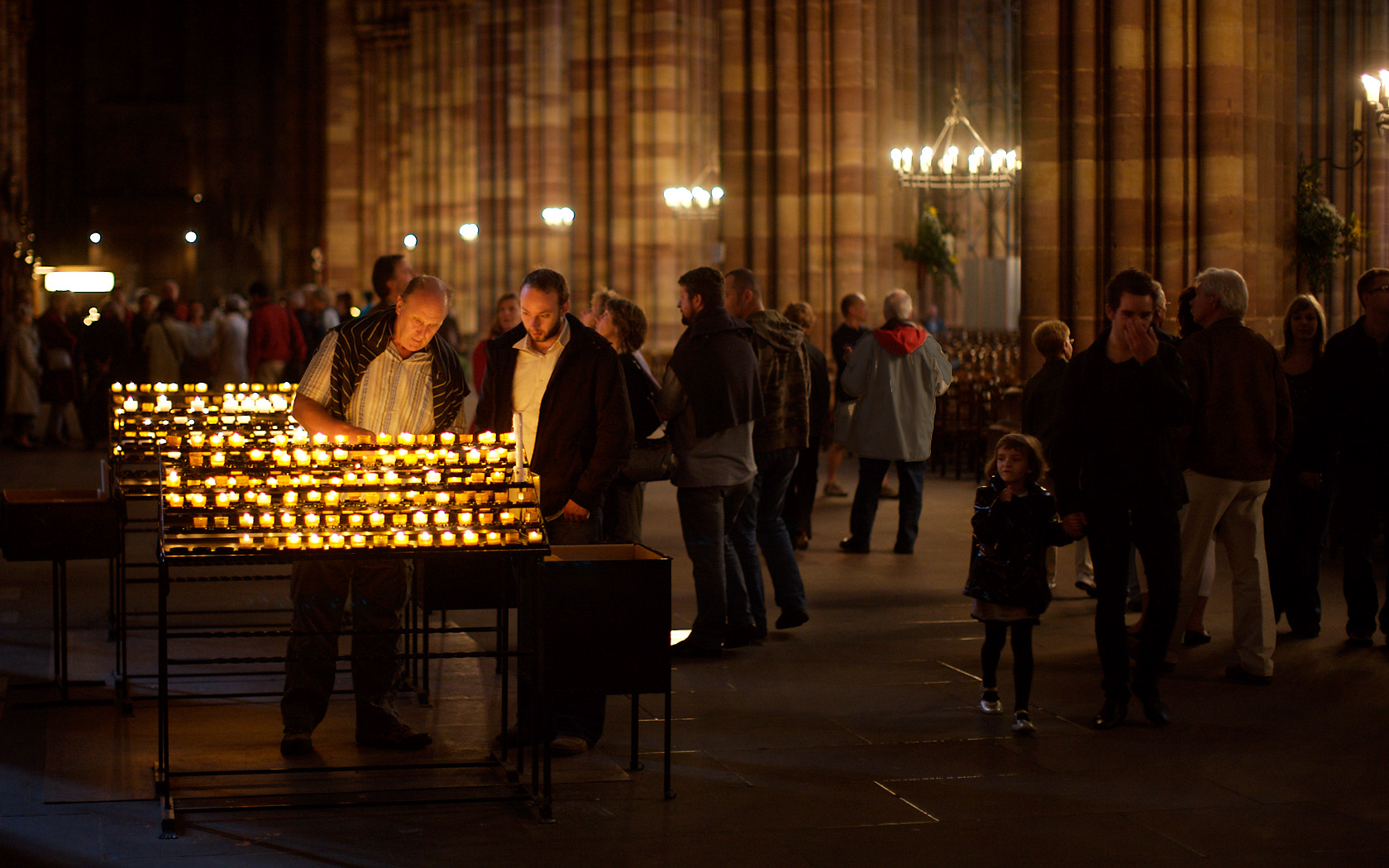 Gothic architecture was revolutionary in the 12th century because it allowed for very tall structures with relatively thin walls. And thin walls meant plenty of windows and lots of light. Compared to previous styles, Gothic architecture was light and airy but to inhabitants of the 21st century, these places are dark.
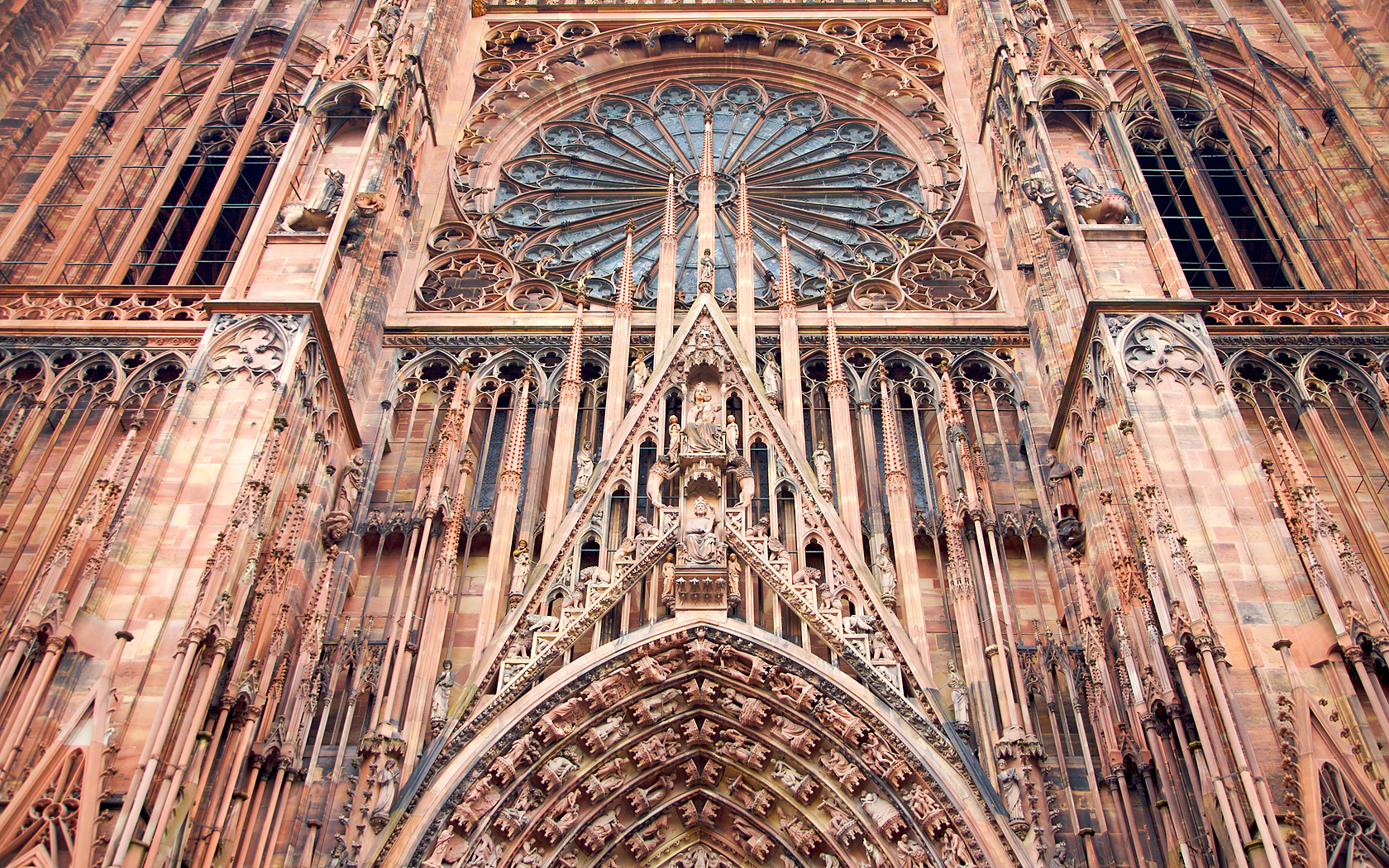 Pink is perhaps a more accurate color to describe this amazing structure. The color comes from the unique, local sandstone from which it is constructed. This cathedral is the 7th tallest church in the world and for 2 1/2 centuries it was the tallest building in the world. The cathedral's namesake town sounds German and the food looks German, but trust me - it is in the beautiful Alsace-Lorraine region of eastern France. On a side note, terrorists sought to detonate a bomb in the square in front of the cathedral in 2000 but the plot was revealed and foiled.
 Scott P and I were waiting to catch the morning train to Paris. As busy as this train station is, I was struck by the peacefulness at the moment I took this photo. As I look at the picture, I am also drawn to the fact that the golden morning sunlight streaming in the windows echoes the golden color of the trains. I didn't see this when I took the picture. What I saw were all of the lines and curves and if you go back and look at my architectural photos, it's clear that I have a penchant for lines and curves.
 Talk of Michael Jackson's final resting place inspired this post. This is one of many notable musicians buried in Vienna's Central Cemetery. To name a few: Beethoven, Schubert, Brahms, Strauss and (who could forget) Falco, the Vienna-born musician whose biggest hit was "Rock Me Amadeus," are buried in this cemetery. Mozart, unfortunately, is buried elsewhere in Vienna.
 There are too many tourists in Venice, which is an irony I think I've expressed before - since I'm a tourist, too, when I visit the amazing city. The crowds and summer heat will wear you out but one of the particular charms of this place is that if you wander aimlessly away from the crowds, you can encounter streets like the one pictured here. And often at the end of the street, you will find one of the many canals that aren't subject to heavy boat or gondola traffic.