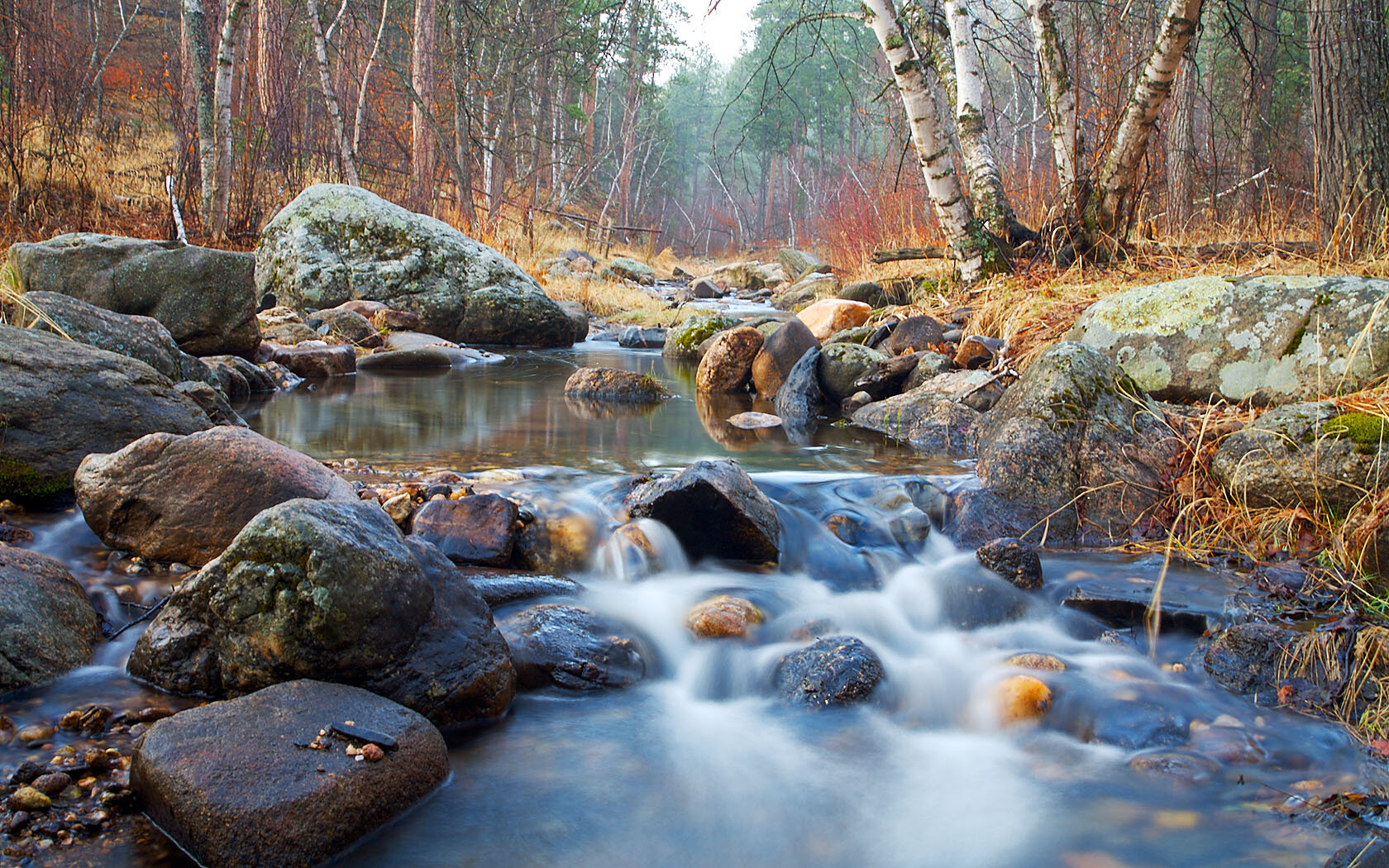
 I am taking a bit of a break from my blog and so I thought I'd post a few of my favorites.
Nature
12-17-12 Winterscape
in Blog, Landscape, Nature, Seasons, South Dakota
 I went wading through snow that was calf deep to get this shot. Twice. Was it worth it? I'd say so, but only because the drive north of town in mysterious winter fog, the trek through snow and the framing of the frost lined trees was a small adventure and it got me out of the house on a gray winter day.Whether I was successful in my adventure or not wasn't the most important thing. Sometimes it's the concept and the process that matter most; it's the journey, not the destination. Or, in the words of Harry Chapin in his song Greyhound, "It's got to be the going not the getting there that's good."
12-16-12 Country Road
in Blog, HDR, Nature, Uncategorized
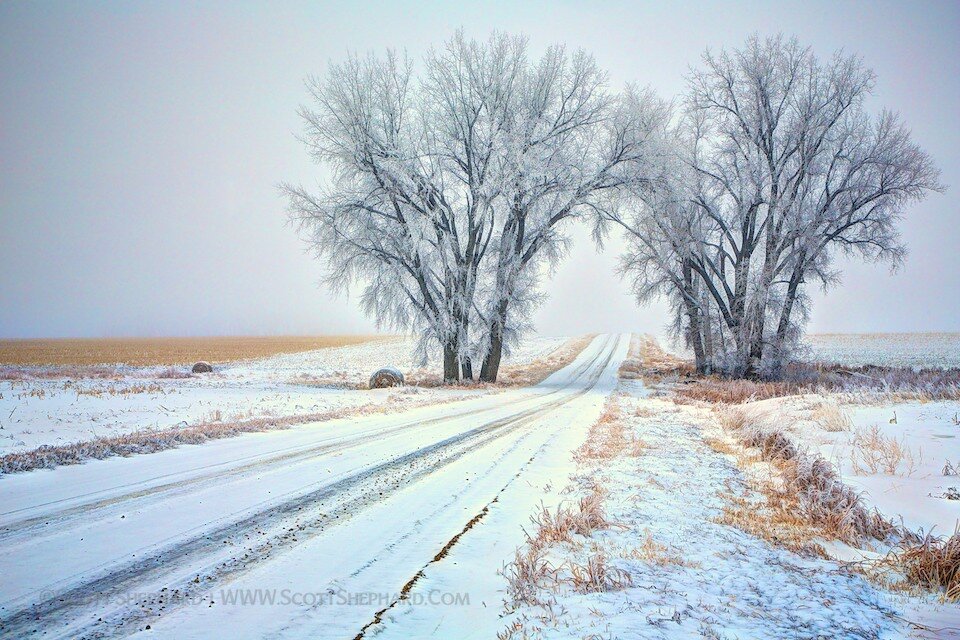 I spend a couple hours driving out in the country looking for something suitable to photograph. It had snowed last weekend and today was foggy so I figured I'd find something interesting involving fog and frost. This photo is one of several I took.Once I had the images, the next challenge was taking what turned out to be very low contrast scenes into something worth sharing. Thanks to Aperture and a couple of software plug-ins, I got was I had imagined I might. I should say, incidentally, that this is an HDR photo - there are two exposures layered here to help me get a good overall exposure.
12-06-12 Kinkankuji
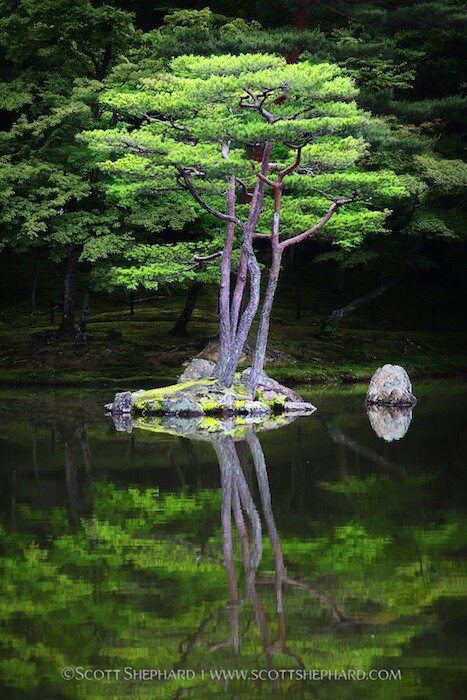 I'll have to admit that I like this photo, which isn't something I'm inclined to say about my work. A photo should speak for itself, I guess.But I like this one because it's green, and South Dakota is anything but green right now. I also like it because I rescued it from the virtual dumpster. Finally, I like it because it helps me see the value of software processes in a photographer's work flow. I don't want to get technical in today's post but I will say that I started with this image (click), and ended up with the "adjusted" version in the blog. They say you can't fool Mother Nature. But she can be enhanced. :-)Kinkankuji is otherwise known as the Golden Pavilion, which is near/in Kyoto, Japan. Here's a satellite view (click) of the location. I wish I could tell you exactly where I was standing when I took this, but I wasn't in to GPS fixes in 2004, when we visited Japan
12-02-12 Back To Lonesome Lake (HDR)
in Blog, HDR, Landscape, Nature, South Dakota
 It has been more than a year since I have photographed near Lonesome Lake. That session resulted in the photo I donated to the "fireplace room" at Lake Area Technical Institute in Watertown, South Dakota.On this occasion, I told Deb around 4:15 yesterday afternoon that I was going to go looking for a photo opportunity. I wanted to see if I could get something in HDR at sunset that would look good. Then, I invited her along for the ride and she said "yes." What a treat!I started heading north of our town, all the while watching the sun and clouds off to the southwest. My vision for the photo involved bare trees and a beautiful sky just before or just after sunset. I also didn't want any clear signs of civilization. If you go 20 miles north and a few miles west of Watertown, that isn't hard to do.After one other stop, I ended up at Lonesome Lake. By that time, the sun had set, and the clouds weren't all that interesting. But I thought that I could at least show Deb the location. It was getting dark but I decided to try to take a series of photos, knowing that the camera sees light in ways that I don't. I also knew that if I put my camera on a tripod and bracketed the exposures properly, I had several software tools that might produce something worth sharing.And here's the result. There is a surprising amount of texture in this photo, especially given that this (click here) is much closer to what I was seeing when I took the series. Pretty interesting, isn't it?
11-26-12 ALF
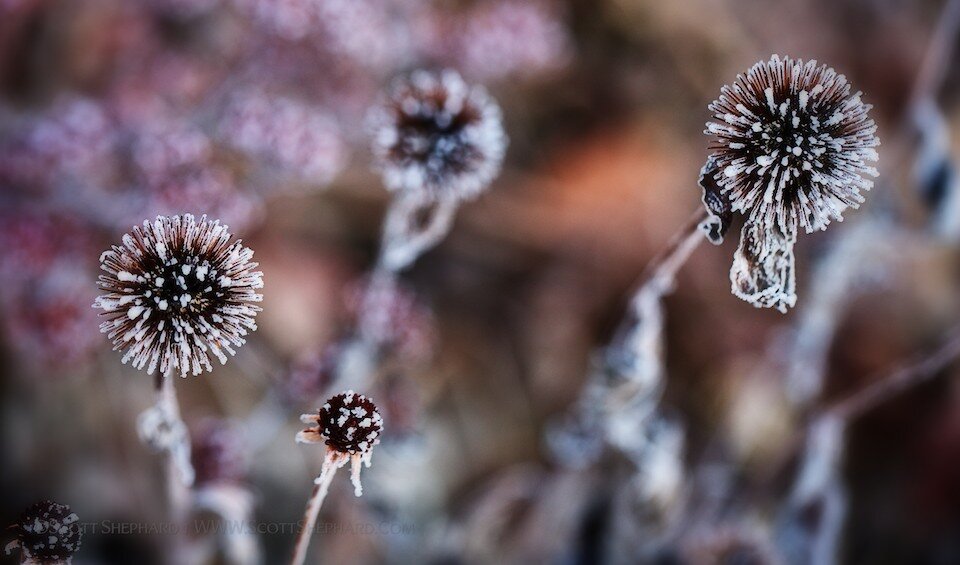 When I wandered out into my wife's dormant flower garden, I noticed the cornflowers first, mainly because they are still standing. Bare and brown, they still shout, "Look at me!"ALF is an acronym made popular by a sitcom that Robin Williams starred in a long time ago. It means "alien life form." And that's what I see when I see these cornflower hulks: they look like something from another place. And close up, they remind me of the evil Death Star in the Star Wars movie.Such is the nature of my imagination when I put the camera to my eye. . . .
11-20-12 Blurring the Lines
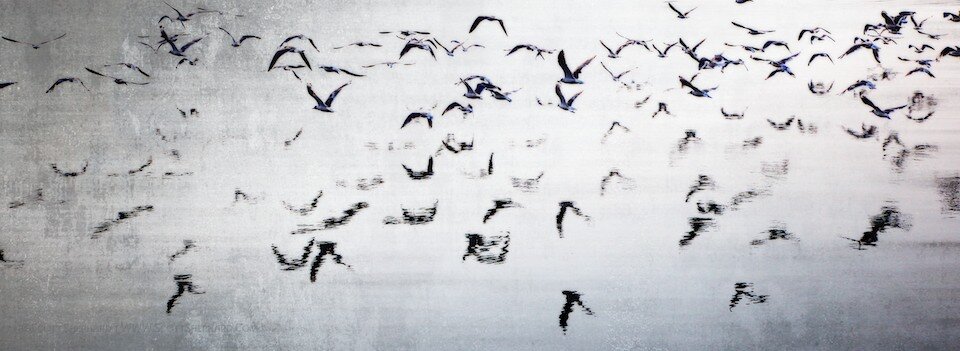 There are a few things that are unusual about this post. First, it comes from the same file as a previous post. I rarely do that. Second, it is cropped unconventionally. What possessed me to eschew the 2:3 or 4:5 ratio? No one knows. Finally, it is heavily filtered. And I teach my students that we filter photo when the photo is substandard to begin with: we plaster over the flaws, so to speak. Thus, I discourage filtering. But I guess I don't always practice what a preach.
11-15-12 Juxtaposition
 There is no inherent juxtaposition in this photo but if you put yesterday's photo next to this, you will no doubt see a bit of a contrast.
11-13-12 Green Growth
in Black Hills, Blog, Nature
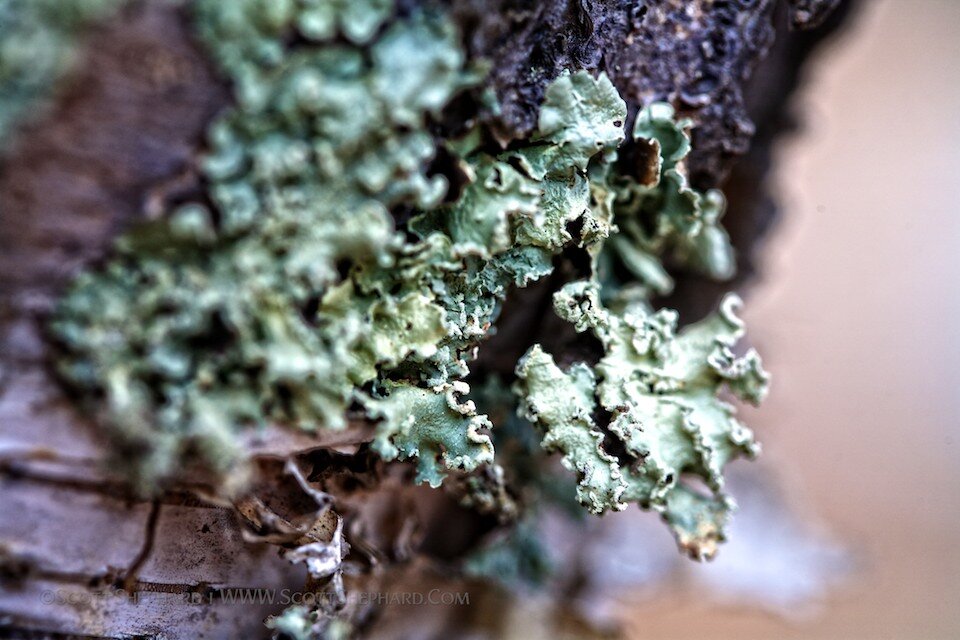 Here's a macro of a patch of green lichen growing on a birch tree in the Black Hills.
11-10-12 Golden Grass
in Blog, Nature, South Dakota
 Photographers call the hour just after sunrise and just before sunset the "golden hour." I think that prairie grass in late summer is inherently beautiful but the golden hour certainly flatters this patch of prairie grass.
11-04-12 Deep Woods
in Black Hills, Blog, Nature
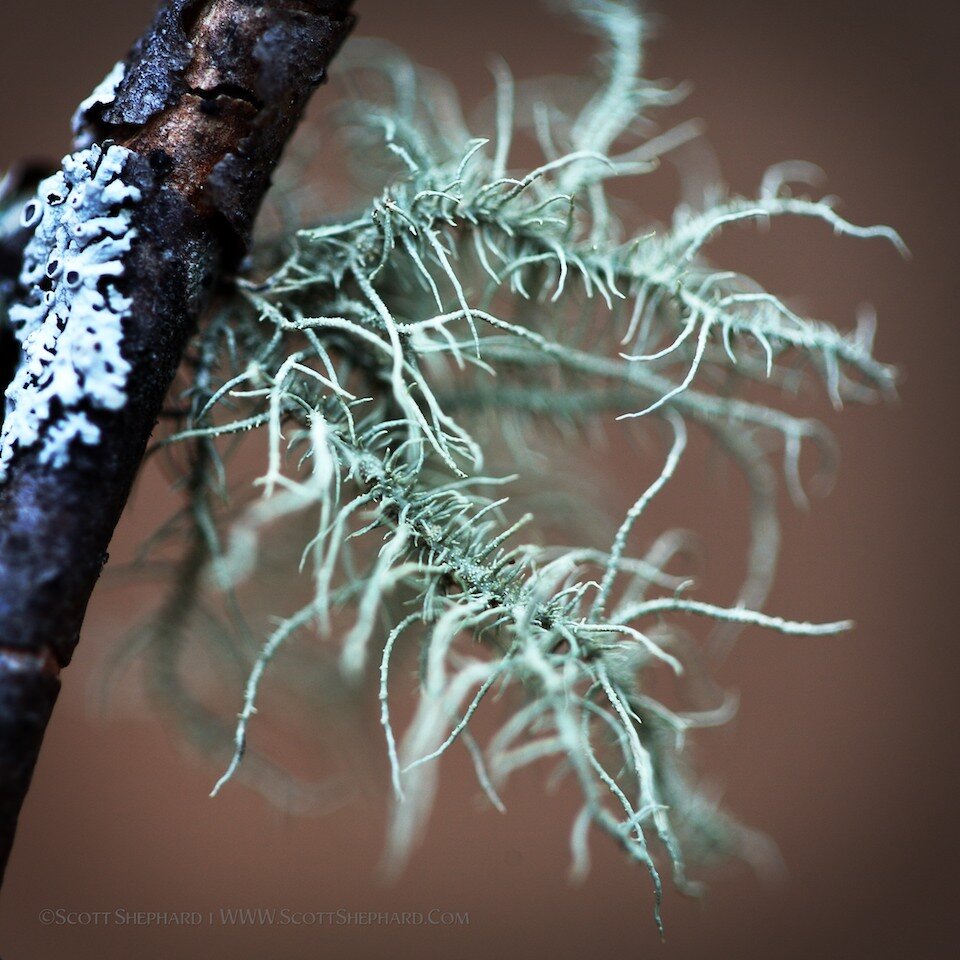 Here's one I took a few years ago and which I found yesterday in a quest to find a photo to "operate" on. By operate I mean "to rescue from relative mediocrity by using cool software." (Try finding that alternate definition in your dictionary!)The software is onOne's new Perfect Photo Suite 7 and the subject is a mossy branch I discovered deep in the shadowy woods along Iron Creek a few miles away from our cabin in the Black Hills.
11-02-12 Revisiting Iron Creek
in Black Hills, Blog, Nature, Photography, South Dakota
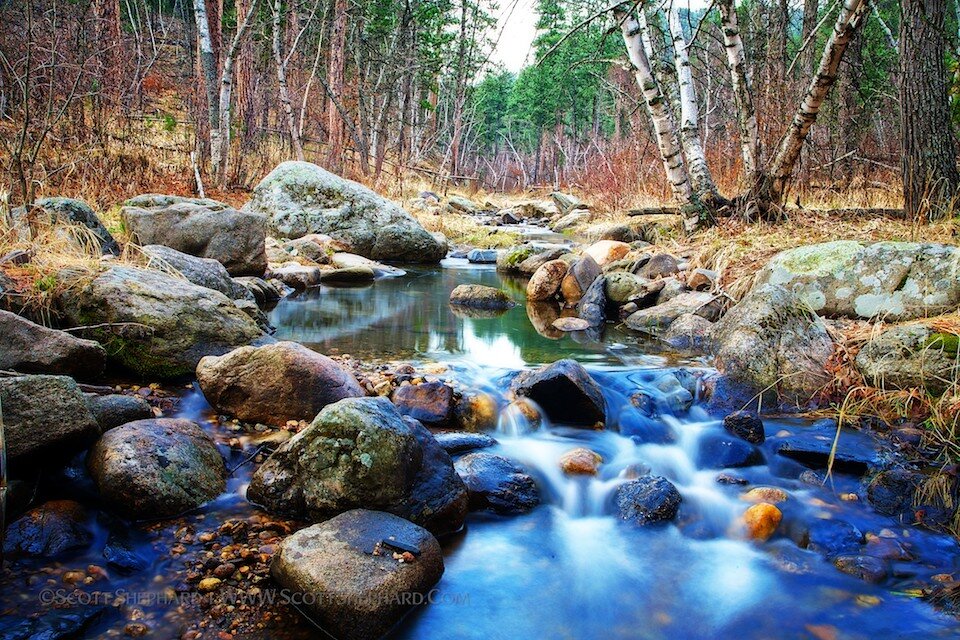 My friend Jack H. asked me yesterday if teaching photography has helped make me a better photographer and he had barely finished the sentence when I said, "Yes." I then went on to say that in finding words to describe thought and physical processes that are the result of 10 years of fairly random reading/looking and endless practice based mainly on intuition has made me more aware of the complexities of finding, framing and capturing my subjects.Beyond that, I am much more sophisticated in how I use software. And this photo is an example. Frankly, I have posted a nearly identical shot of this place in this blog already. The difference is that I was "playing" with software that I didn't have a few years ago and with processes like sharpening, white balance, saturation and contrast that I didn't have as of understanding as I do now.Is this a better photo? Maybe not. In fact, the casual observer may not even see what is "right" about this photo. I would like to think that my second year photo students would because I see clear evidence that they "get it": that they see and understand the 10,000 minute differences between the simple and the sublime.Here's the previous version: