 This is a small, country lane a couple miles outside of Sienna, Italy.
02-21-10 Tuscan Lane
in Europe

This is a small, country lane a couple miles outside of Sienna, Italy.
 There were many things about our brief visit to Alaska that are memorable. But oddly, the profusion of these tasty, orange berries stands out. No doubt there is a name for them but all I know is that I didn't eat enough.
;

This work is licensed under a Creative Commons Attribution-Noncommercial-No Derivative Works 3.0 United States License.
 I just finished teaching a short course at night called "Intro To Digital Photography." I had a great group, though I've discovered that trying to translate the process of conceiving, taking and processing a digital photo isn't easy. But teaching photography has been good for me because it has helped me objectify my hobby and break it down. My conclusion is this: taking and making a good photo is a very complex process.
So why a photo of Evie and her horse? Evie's mother was one of my students in this class and helped with this photo. So I thought I'd post it. Like the photo of Gabriel from a few weeks ago, this photo breaks a rule of portrait photography that says that the subject's face should be the biggest object in the photo. But I think Evie does a good job of stealing the viewer's attention. :-)
Canon 1D 1/125s f/4.5 ISO200 70mm
;
This work is licensed under a Creative Commons Attribution-Noncommercial-No Derivative Works 3.0 United States License.
 This is a quintessential South Dakota sunrise: a single tree and an expanse of prairie pasture. The tree and the sunrise are commonplace; but the clouds aren't. On this particular morning, I was struck by texture of the clouds and how there was a single band of sunlight along the horizon. Light like this is short lived. Usually, you can't say, "That's pretty - I'll go get my camera." By the time you have your camera, even if it is only minutes later, the moment has passed.
Canon 1D 1/60s f/2.8 ISO400 200mm
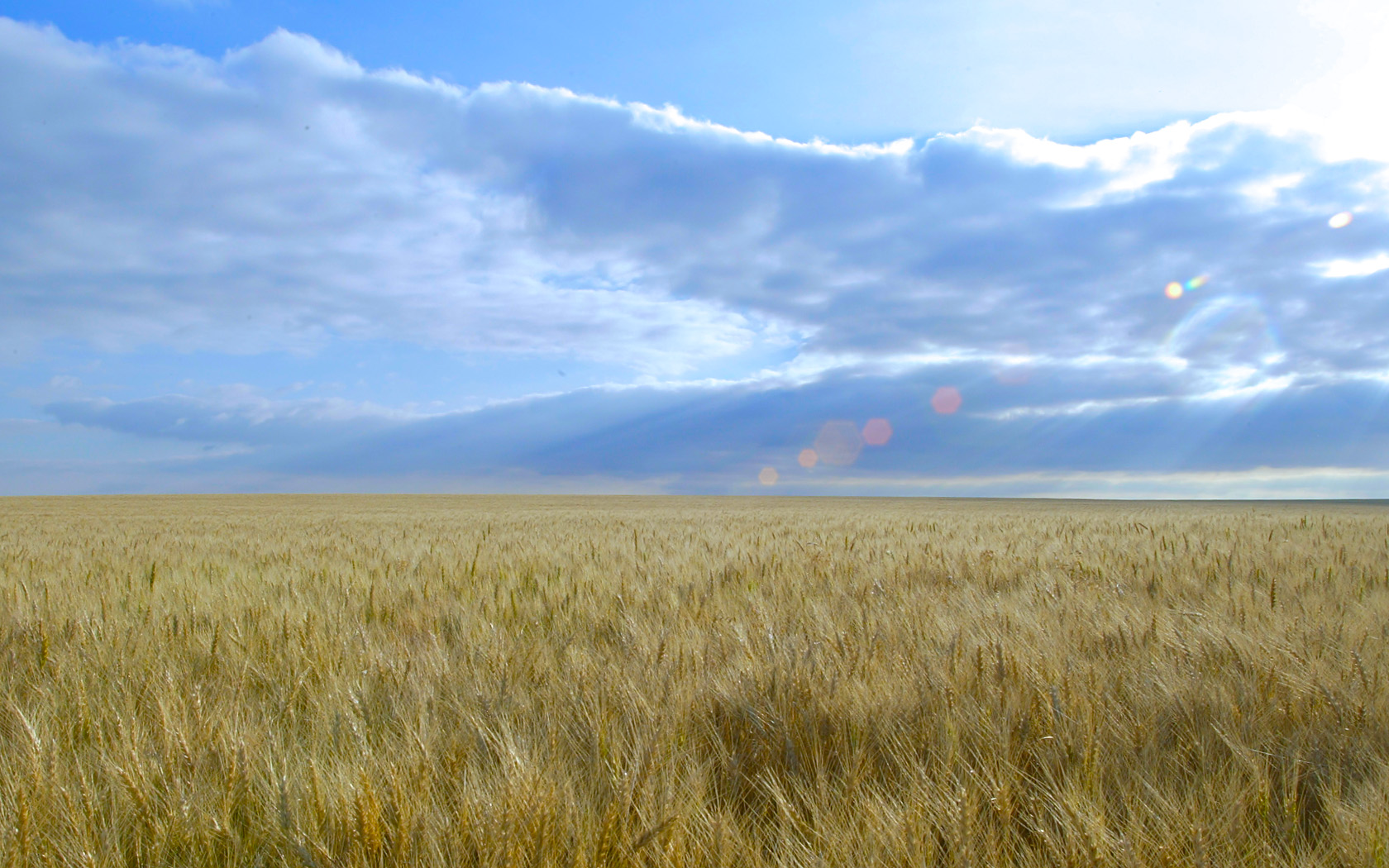 I was within a few miles of the Missouri River (and Lake Oahe) when I saw the low sun lighting up this wheat field. One of the reasons you don't let the sun hit your lens is "lens flair," which is apparent in this photo. Lens flare is caused by the sun reflecting and refracting off of interior lens elements. But sometimes it can enhance a photo.
I don't know if the flare helps this picture. But for me the picture is enough: an expansive field of golden wheat on a sunny summer day.
Canon 1D 1/125s f/18.0 ISO200 20mm
 I have discovered that pale yellow flowers are hard to photograph and this is probably the best I can do. I hope you have a well-adjusted monitor!
Can you see the light in this photo? Look at the softly highlighted stems of these flowers and you will. I don't think I saw this when I took the photo. As I've said before, there are often things I see on the computer that aren't really all that visible through the view finder.
Canon 5D 1/320s f/2.8 ISO160 150mm
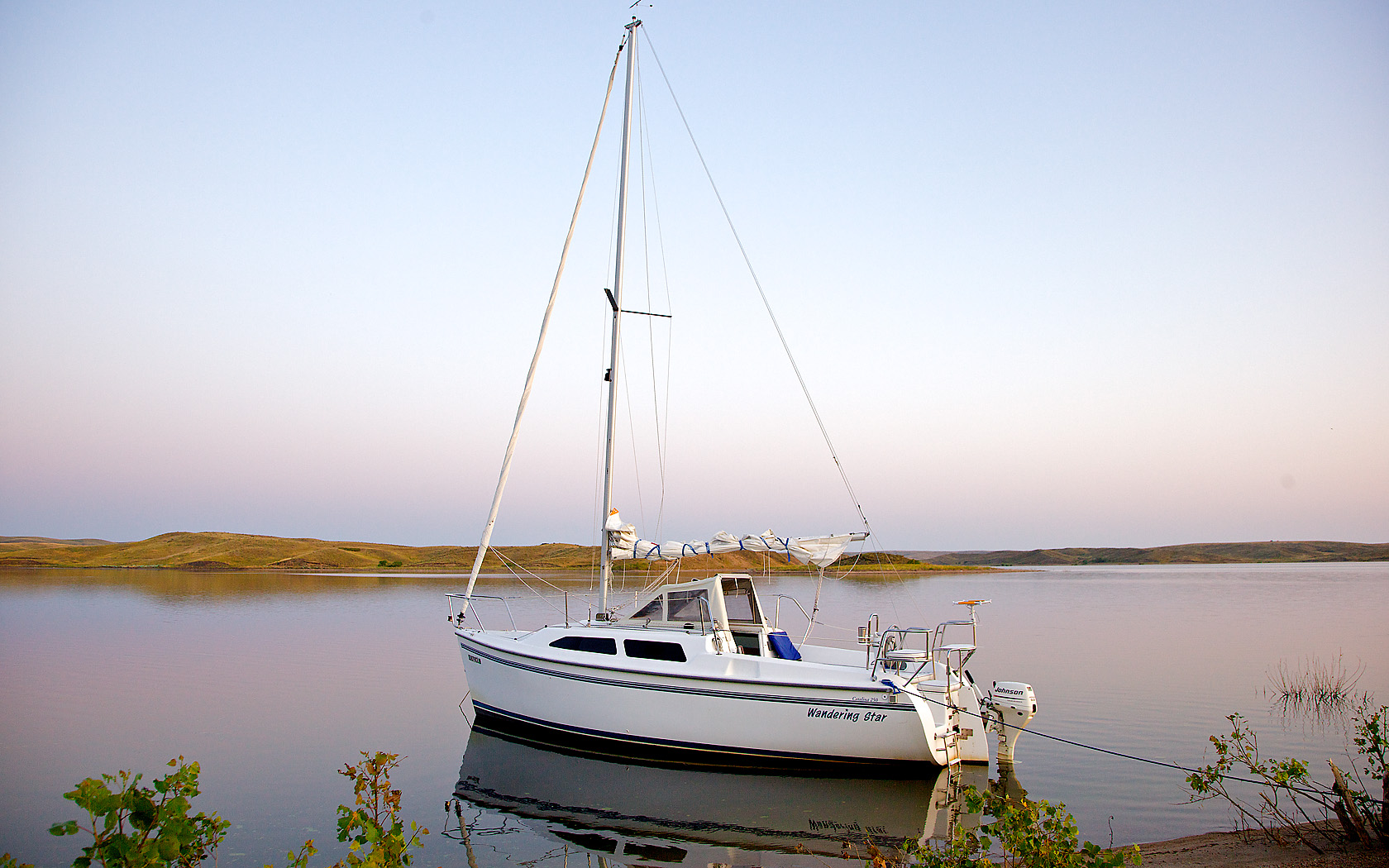 Such is the deep drop-off at Lake Oahe that I can use "Mediterranean" mooring (click) and not worry about harming my rudder. I don't do this very often but I was practicing for my imaginary bareboat charter trip to the Dalmatian Islands next summer.
I have been spending some time thinking about sailing season, though I try not to do this too early, since real sailing weather probably won't be here for two or three months. But it doesn't hurt to dream. . . .
(For a bird's eye view of this spot, check out "Big Sky Over Mission Creek".)
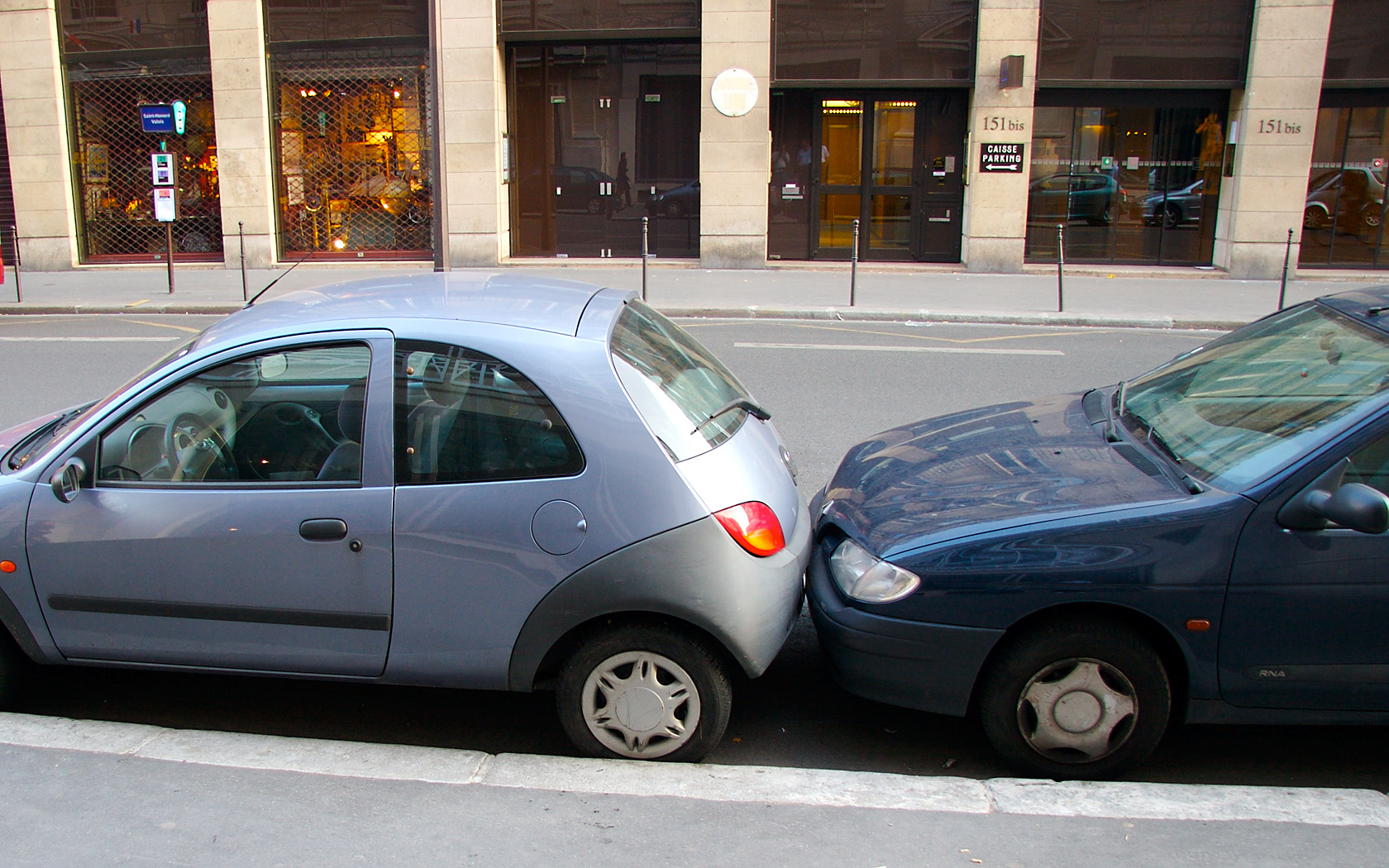 I apologize if you've been lured to my blog this week thinking that "A Week In Paris" would offer a series of spectacular views of the great monuments and buildings in this amazing city. Those shots have been posted (more or less). Two of my favorites: Here and Here
While those structures help define Paris, so does this snapshot. This was not a car accident; this was someone making the most out of limited curb side parking. I have see this more than once is my travels to the big cities of Europe. I have even seen cars wedged in on both ends and then, as if things could be made worse, cars parking in a new row along side of the blocked-in cars. I have never driven in Paris and don't think that I want to.
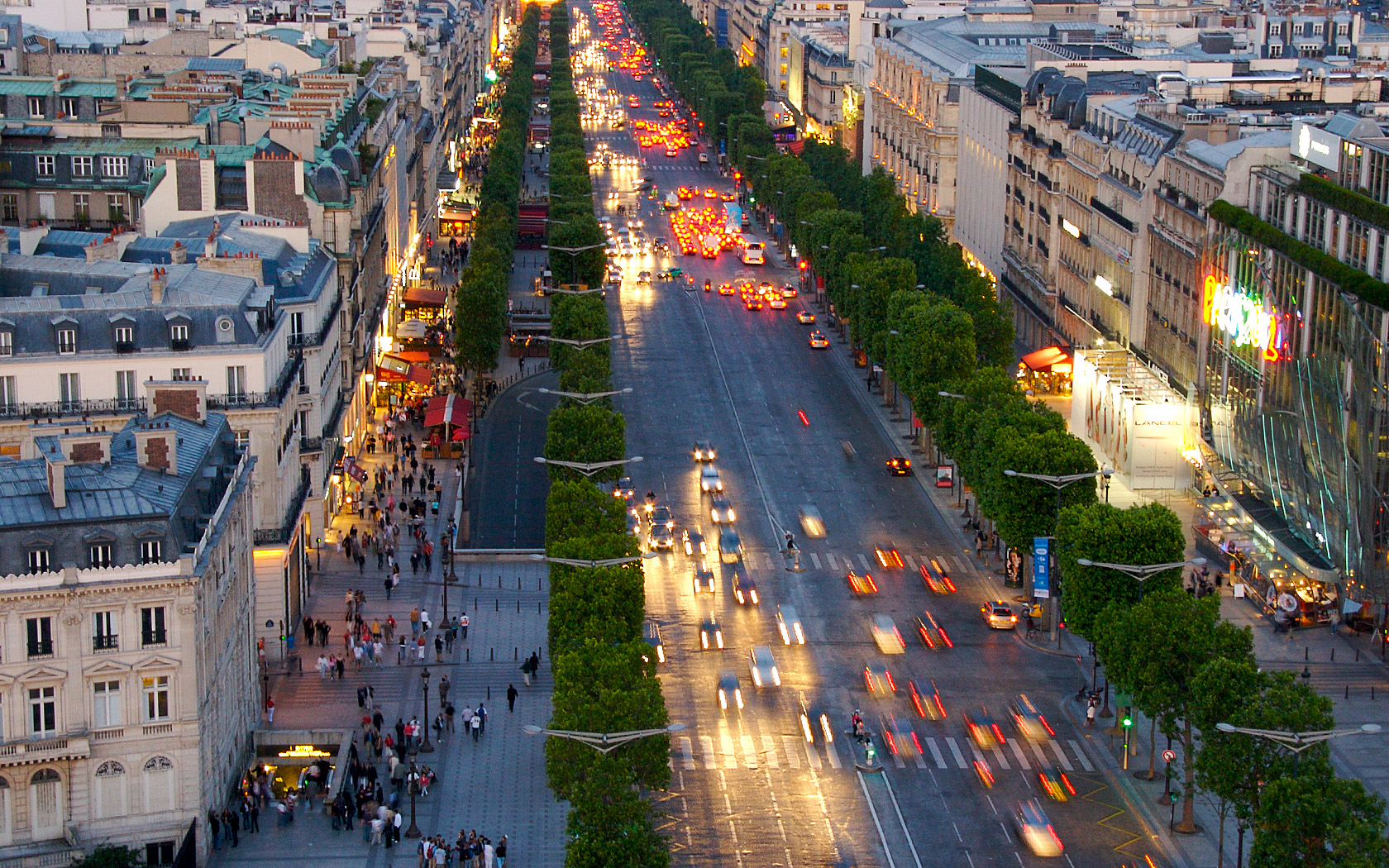 This is the most famous street in the world, as seen from the Arc di Triomphe. The Champs-Elyssee has some of the most exclusive stores and restuarants in the world: Chanel, Hugo Boss, Cartier, Louis Vuitton, to name a few. But there is a MacDonalds, too.
Would you think less of me if I told you that I had a Le Big Mac and a chocolate crepe there? It was the only store that I could afford.
 There is a long history of risky French architecture. For example, the Eiffel Tower was widely criticized when it was built. So, too, was the new entrance to the Louvre, which is what you are looking at in this photo. It was designed by the Chinese American architect I.M. Pei.
Both the Eiffel Tower and "the Pyramid" were considered incongruous monstrosities when they were constructed. But today they are iconic. I wonder if anyone thought the Notre Dame de Paris was a monstrosity when it was built? Was Watertown's clock tower considered "an incongruous monstrosity" when it was erected?
 There is much that is captivating about a Gothic cathedral like the famous Notre Dame of Paris. The beautiful stained glass and the lofty interior space must have been truly awe inspiring to the 12th century Parisian. They certainly are to me.
In this photo, you are looking at an innovation that allowed the soaring interior space and relatively thin walls. It's called "rib vaulting." It may look chaotic but it is in fact very carefully arranged. How did they figure this out? Mostly trial and error and amazing intuition. The medieval masons didn't have computer models or even sophisticated math.
Here's another tidbit about gothic cathedrals: they are held together by gravity, not the mortar between the blocks. The mortar is really just a spacer to keep the stories level. Ribbed vaulting like this would have been stacked on wooden supports until the top stones were put in place. Once complete, the support was removed and the ceiling stayed up on its own. Impressed?
 Napoleon, who conquered much of Europe, died at age 51 on the tiny island of St. Helena, where he had been exiled. Even today St. Helena is one of the most isolated places on earth. (See it on a map.) He was buried by the British in a grave with no name, primarily because of a dispute over which name should go on the tomb. Some wanted his full name - Napoleon Bonaparte. Others wanted the single name "Napoleon." In France, kings went by a single name.
Almost 20 years later, Napoleon's remains were returned to Paris, where he was given a state funeral and buried under the dome of Les Invalides, a church near a hospital complex for French soldiers. Napolean, who stood 5'4" tall, is buried in a massive sarcophagus, the outer layer of which is made of porphyry marble. Inlaid marble lettering around his tomb commemorates his most famous victories. One battle not marked is Waterloo, which was his final defeat.
That's enough history!

