I posted a stone carving from a building in Chicago yesterday and observed that it was done in an "era when there was time, talent and money to hand carve decorations for skyscrapers." The building you are looking at is another sort of sky scraper: it is the Notre Dame de Paris. It is the most famous Gothic Cathedral and it took over a 100 years to construct. It, too, was done in an era when there was at least time and talent to construct such buildings.The carvings in this photo are over 1000 years old.
The Great Stone Face
In middle school I remember reading a short story entitled "The Great Stone Face" by Hawthorne. While I remember the title, I don't remember anything about the story. I do remember thinking that my craggy-faced teacher, who was an old lady who rarely smiled, could aptly be called "stone face." How old was she? Maybe 40, which seems ancient when you are 13.Anyway, this is a carved limestone cornice on some building in Chicago. I wish I were more disciplined when it comes to my photos. I know that a "real" photographer would have recorded the precise location. I don't know when the structure this decorates was built, but it was clearly an era when there was time, talent and money to hand carve decorations for skyscrapers. It was probably during a time when Ayn Rand's capitalist utopia was going full bore. Who is John Gault?Canon 20D 1/100s f/7.1 ISO400 61mm
Mercurial
I was disgustedly looking out our dining room windows, wondering if the cold rain would end any time soon. But then I saw the silver lining - wind-driven rain had covered the window in beads of water of random size and shape.I like how each drop reflects the color of the greenery in our back yard and how the bright silver of the beads makes them look droplets of mercury. You've never seen drops of mercury? In the 60's it was part of our middle school science curriculum to get to play with mercury! The teacher came around with a heavy bottle of silver liquid and poured globs onto our tables. It was liquid metal.And when the teacher wasn't looking, we took silver dimes and coated them. They stayed slippery for days as the mercury evaporated. Do I have mental problems and other infirmities because I played with what I now know was a highly poisonous material? No doubt.Canoon 5DII 1/60s f/4.0 ISO800 100mm
My Neighbor's Flowers
I shouldn't admit that I've been admiring my neighbor's purple tulips. But I couldn't help it. All of her tulips are purple and, against the green grass, stunning. And so I sneaked over to their back yard and took several surreptitious shots before I made my way back to our yard. Only their dog noticed me: it barked continuously while I was in their yard. Fortunately, the dog was shut inside. So I was safe. And my wife doesn't know I have a thing for my neighbor's flowers.
A Colorful Wish
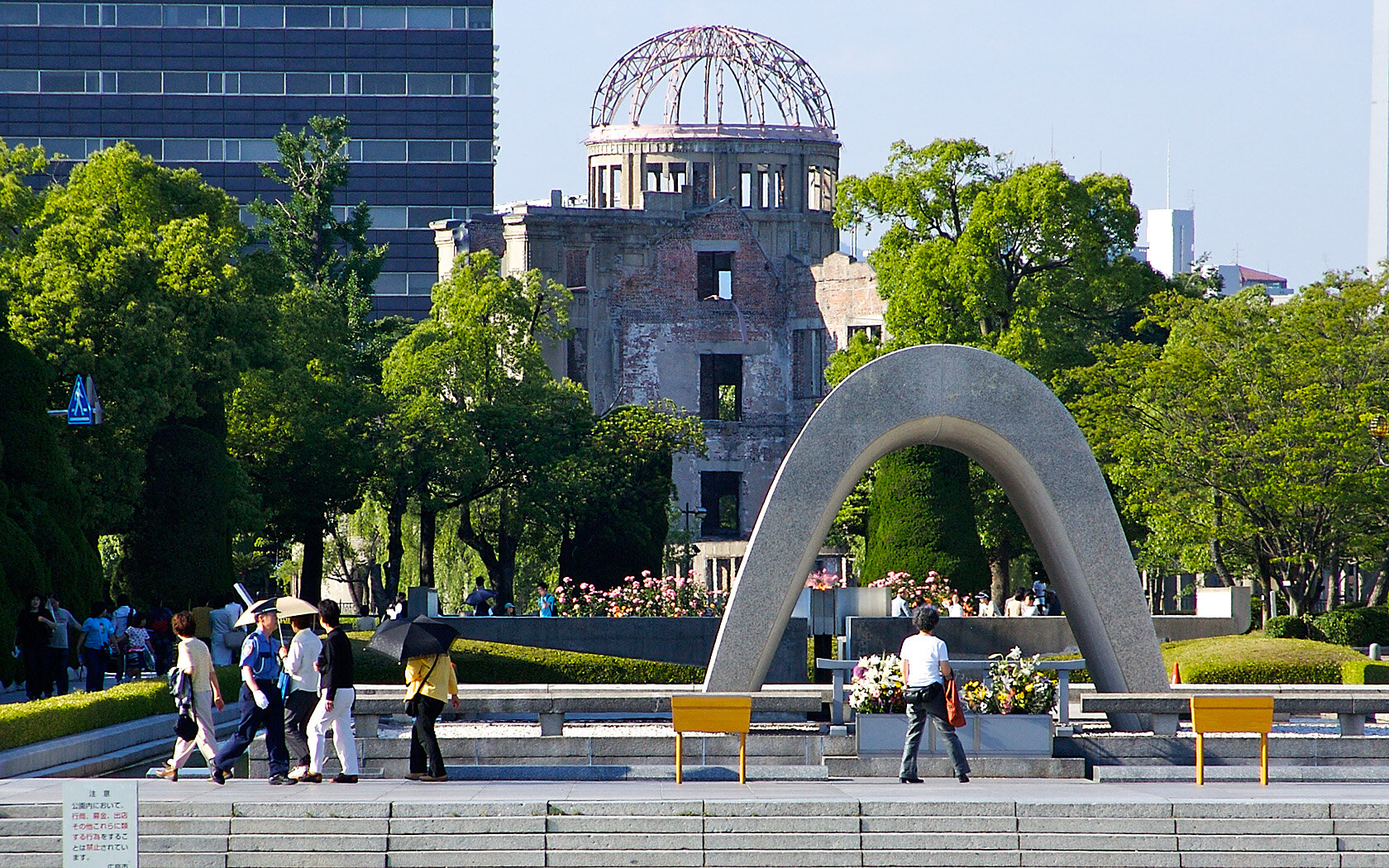
Ten years after the bombing of Hiroshima, a young girl named Sadako Sasaki died of leukemia as a result of radiation from the nuclear bomb that was dropped on her city. But before she died, she folded nearly 1000 origami paper cranes. Legend had it that if you folded 1000 paper cranes, you would be granted a wish. Her wish, of course, was to be healthy again so she could run and play with the other children.Sadly, she died. But her story became famous and today the origami crane is a symbol of international peace. This photo was taken at Hiroshima. But not too long ago I walked into a geography classroom in my school in Watertown, SD, and hanging from the ceiling was a multitude of colorful paper cranes.The Hirsoshima Peace Memorial wasn't on my list of things to see when we visited Japan a few years ago but our son Brian insisted that we go. I'm glad we did. Interestingly, I am moved more now when I look at the photos I took than I was when I was taking them. But at that time, I didn't know the story of Sadako Sasaki.Here's a view of of the monument that houses the eternal flame, with the famous Genbaku Dome in the background. Click here for a bird's eye view.
Reminder of the Cold War
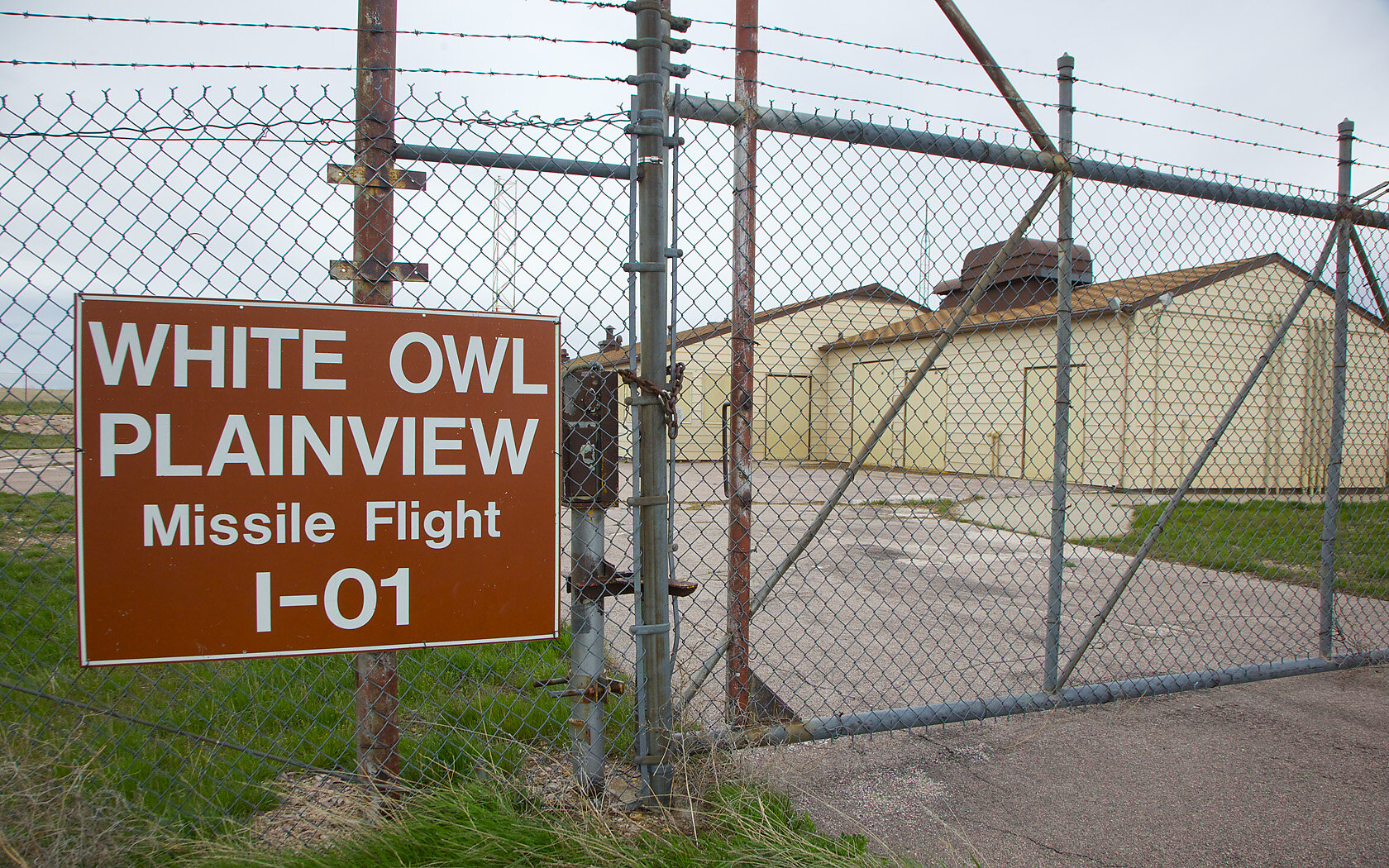
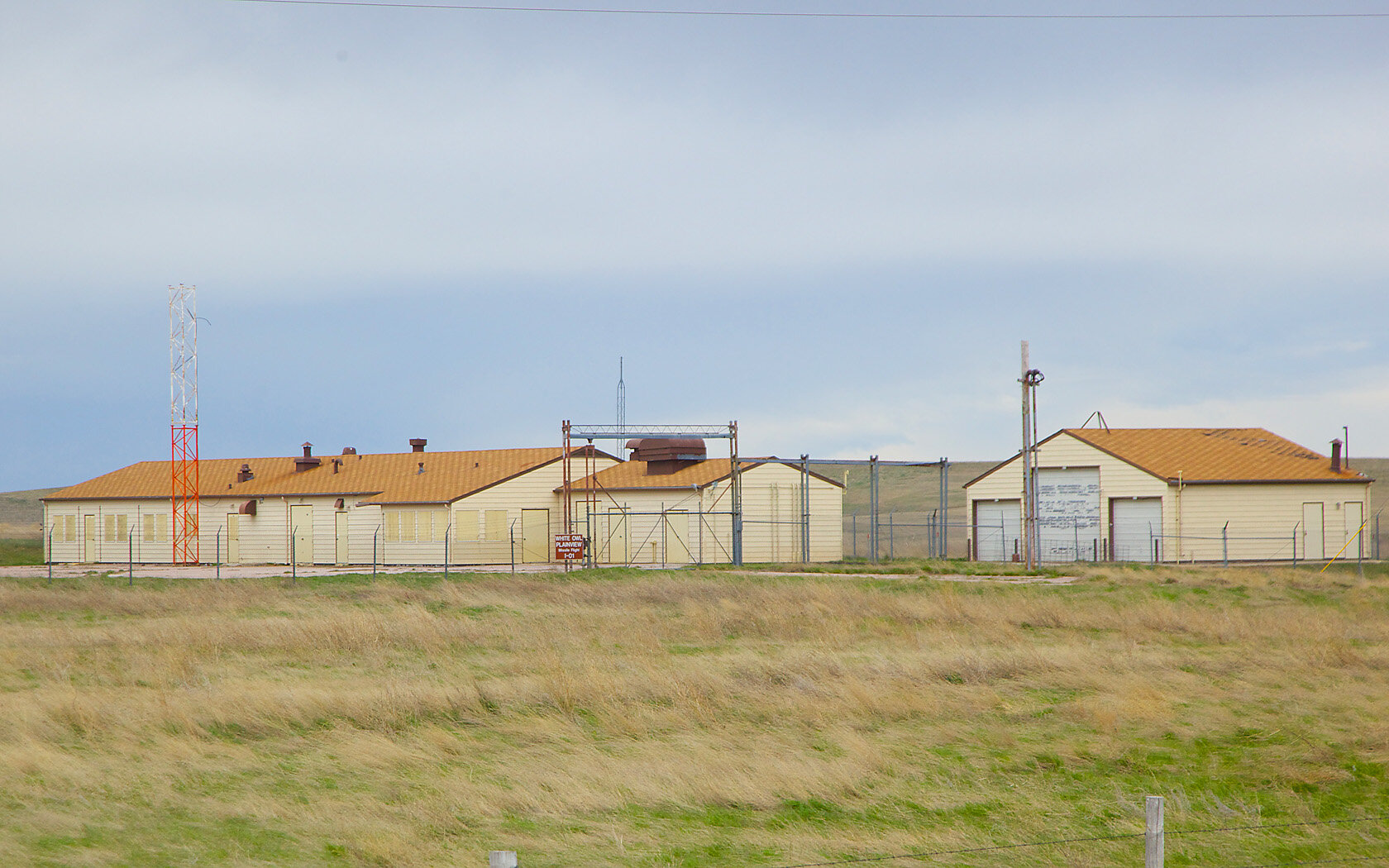
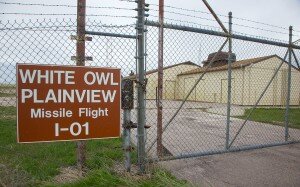
You may be surprised to learn that during the height of the Cold War, South Dakota was one of the ten most dangerous places to live in the US in the event of a nuclear war. We had few people and, aside from Ellsworth Air Force Base, few strategic targets. But what my state had was thousands of square miles of range land peppered with nuclear tipped Minute Man missiles. These missiles sites were like lightning rods: their intent was to protect our nation, but they also turned their locations in to attractive targets.This is one of several "missile flight" centers. These secured compounds were for maintenance and launch of nuclear warheads. Above ground, the places look fairly innocent. But deep underground in reinforced concrete bunkers, the launch commanders would receive their orders, program the flight paths of the missiles they controlled, and push the Big Red Button.*Today, the missiles have been removed, their underground silos imploded, and the missiles flight centers sit vacant. (Here's a broader view of the same site. Also, you can see this on Panoramio - perhaps as the Russians saw it on their own satellite photos.)Incidentally, one of these flight centers has been turned in to a very unique Bed and Breakfast, but you have to go way off the beaten path in South Dakota to sleep there. It's called Juliet 1 B&B and it's located in Opal, SD.(*Big Red Button is my very unofficial term for the launch mechanism.)

Their Day Is Coming
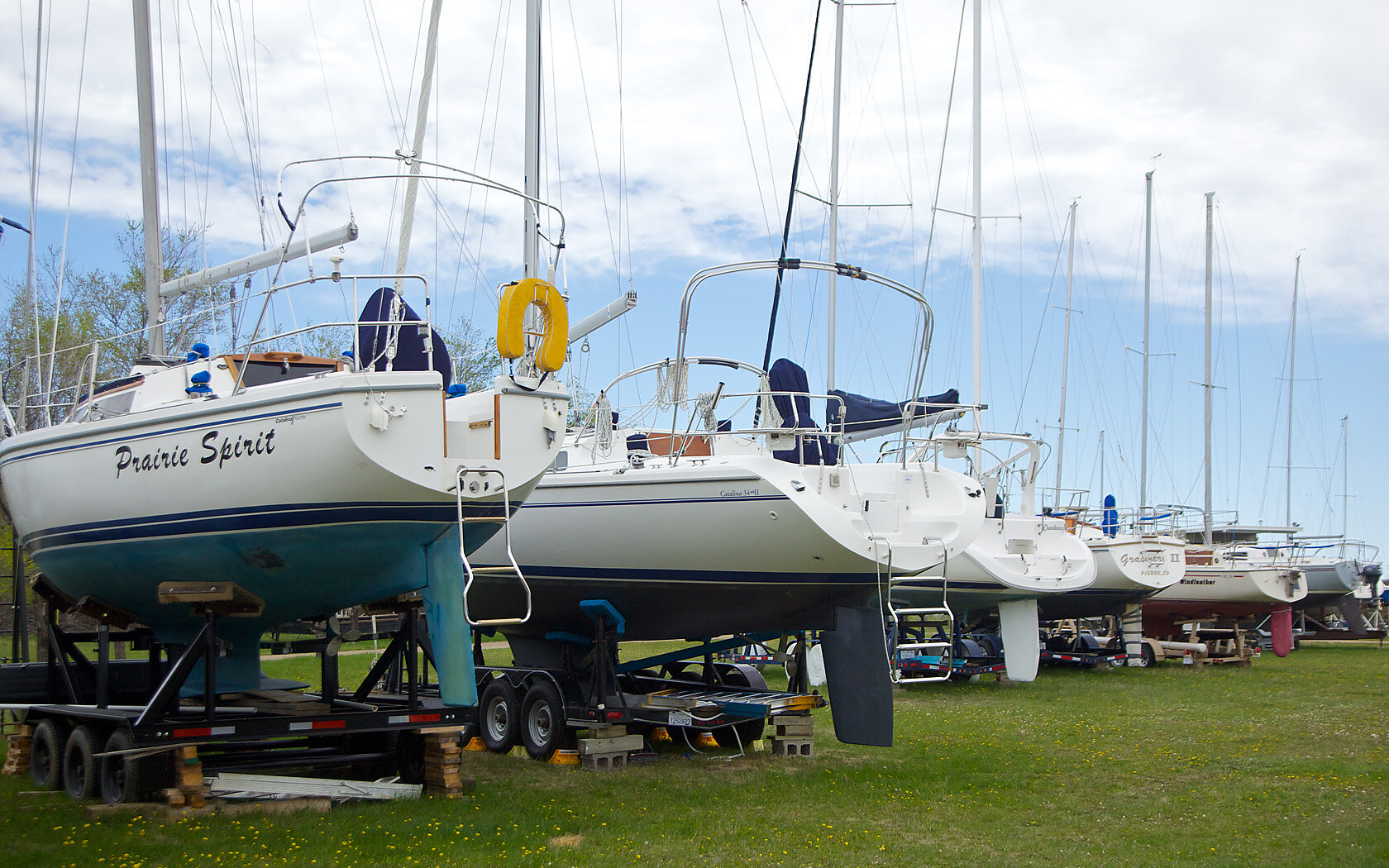
I had been at a meeting in the western part of our state and on the way back home, I stopped by the Spring Creek Marina north of Pierre on lake Oahe. The last time I saw these boats, they were still on the water. Now they sit patiently on their trailers, waiting to be put back in their element.My boat is in my driveway awaiting a few small repairs. In a couple weeks, I hope to have "Wandering Star" on the water and under sail.
Roller Coaster
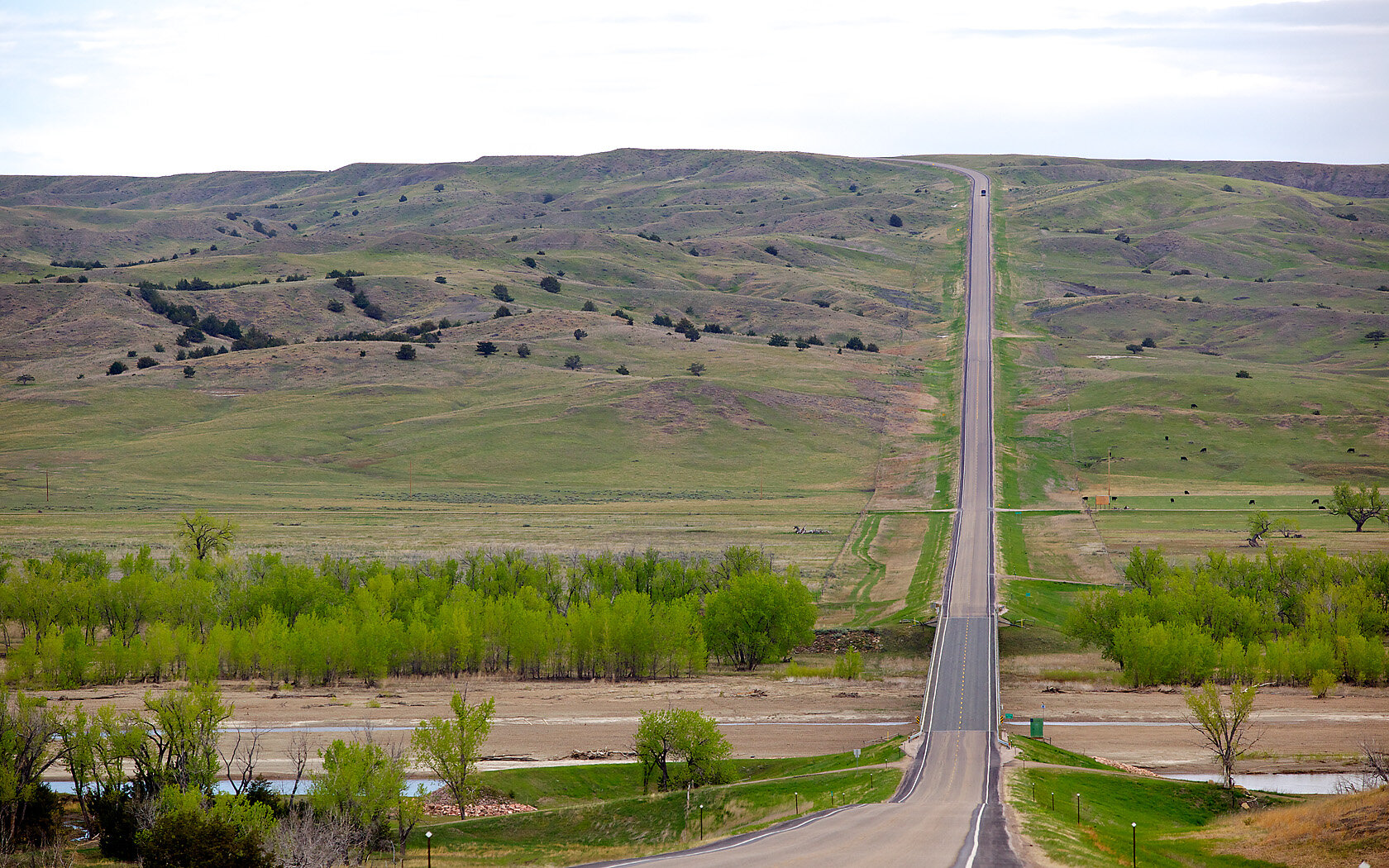
This is the point where highway 34/73 crosses the Cheyenne River in west central South Dakota. This is a roller coaster road on a giant scale. What is most fascinating about the geography here is that these days the Cheyenne River is a mere trickle compared to the huge torrent it was millions of years ago, when it carved out this immense valley.See this place from space.
Relics
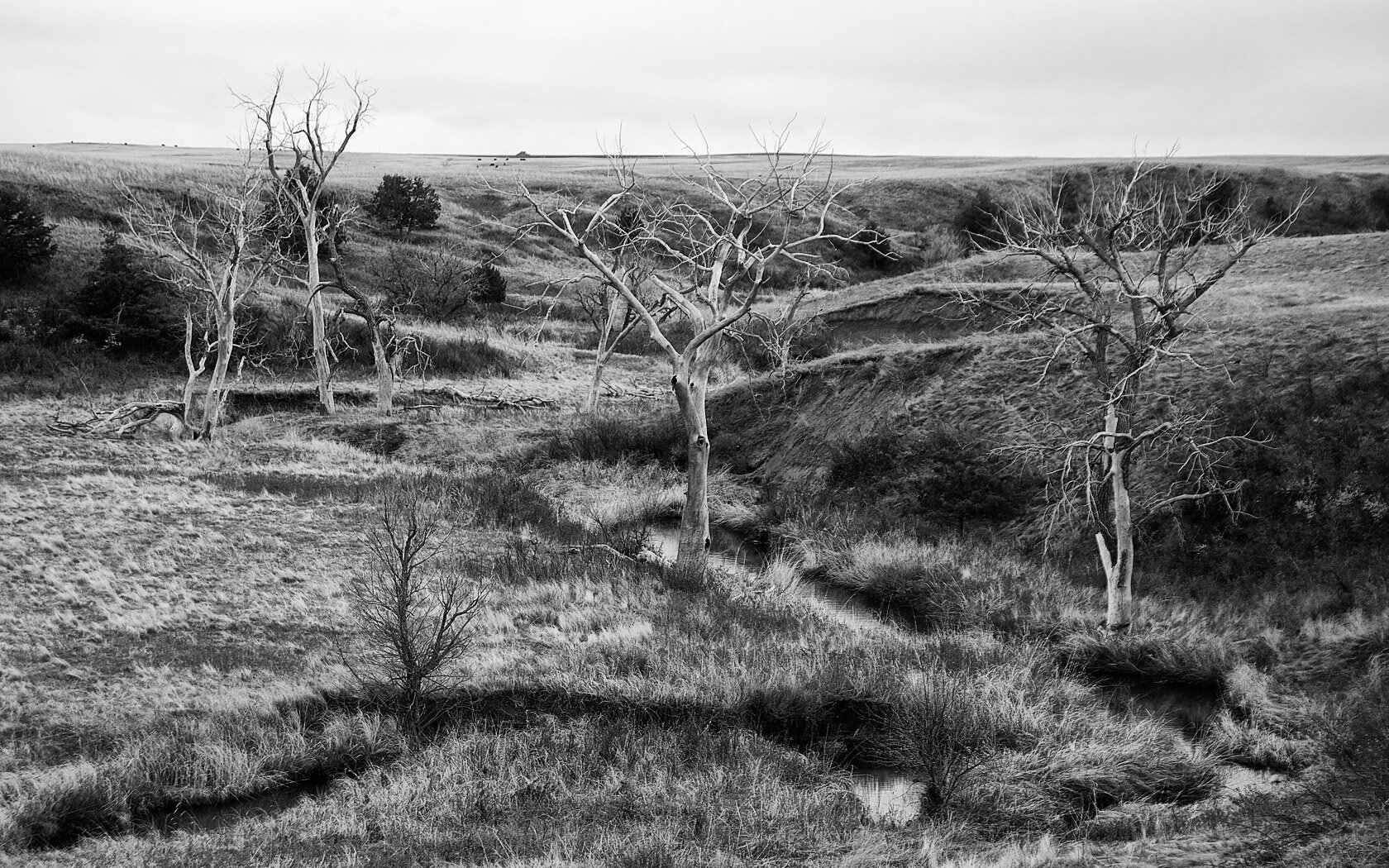
On the journey back to eastern South Dakota from a meeting in Deadwood, I decided to take the back way home. In my urge to get home I often drive by things that I think are photogenic. But on this trip I decided to stop when I saw interesting things.This creek bed is about 100 miles west of Pierre. Not everyone finds dead trees photogenic but I do. I debated about posting the photo in black and white but Deb said she liked the color version better. And she's always right.Here's the black and white version.
More Than Books
Books bags certainly carry more than books. In this case, I watched a young woman stuff her Jack Russel puppy into a book bag and strap it on her back. Before she rode off on her bicycle, she asked me if her dog's head was sticking out. I said, "Yes. And the dog is smiling." I found this photo op in Sitka, Alaska.
Another Try
I've decided that I will try to take a photo of this spot on Iron Creek every year. I probably shouldn't post it here, though, because they all look the same. This shot is a little further upstream from the other Iron Creek shot I posted quite a while ago.Anyway, there was plenty of water coming through the creek on the day I took this. It makes it easier to get the blurred water look that you see in this photo.
Pristine
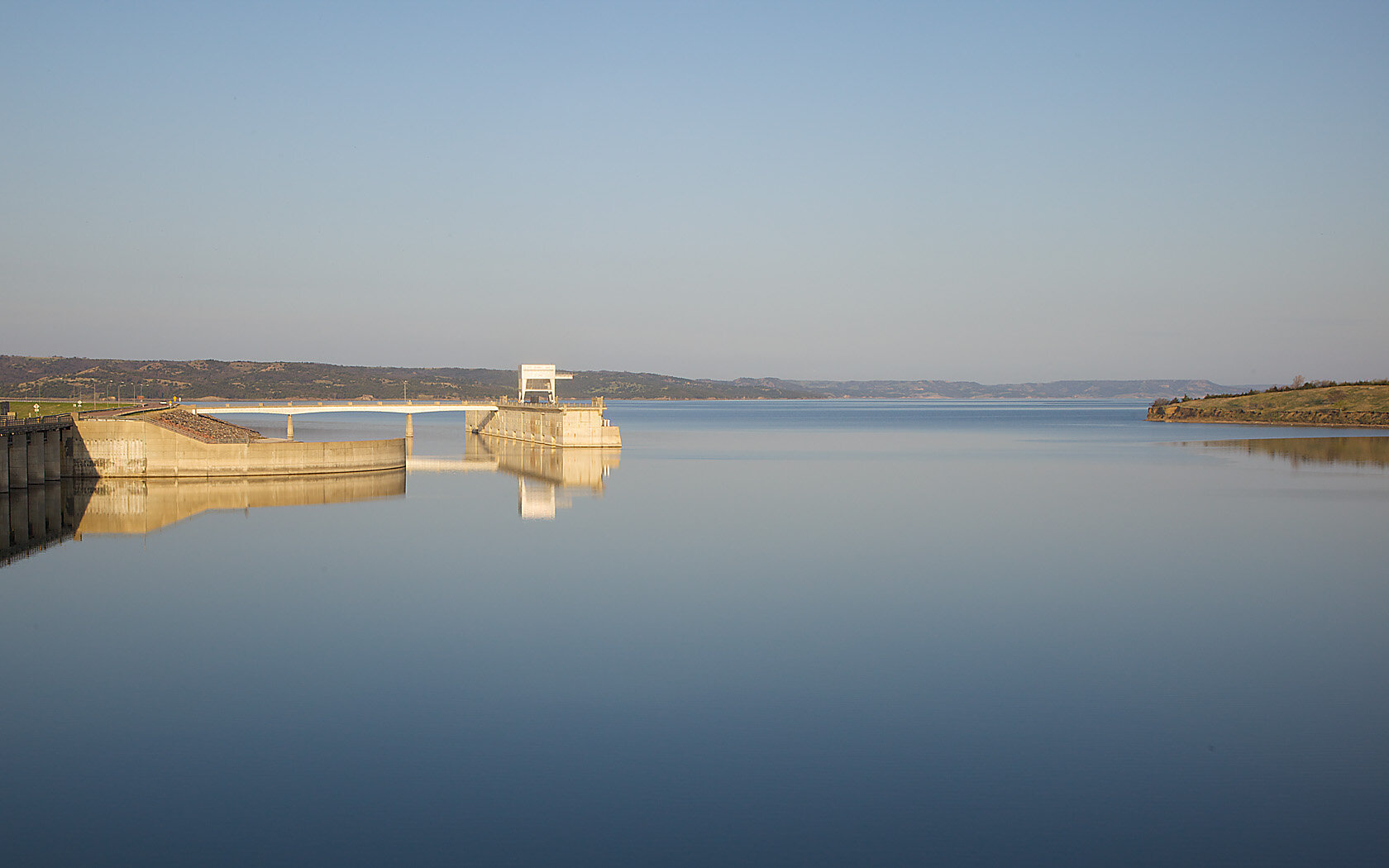
I took this photo a year ago. I was visiting Wagner, SD, and decided to drive over to see the Fort Randall dam and Lake Francis Case. It was one of those spring mornings that was windless, clear and cool.In South Dakota, the Missouri River has been "domesticated" by a series of 4 dams, each of which provides flood control, electricity and large bodies of water that are perfect for fisherman and sailors, though sailors are in the clear minority.To see what the Missouri river looks like just below the dam, check out this photo. And here's a satellite view of this location.